

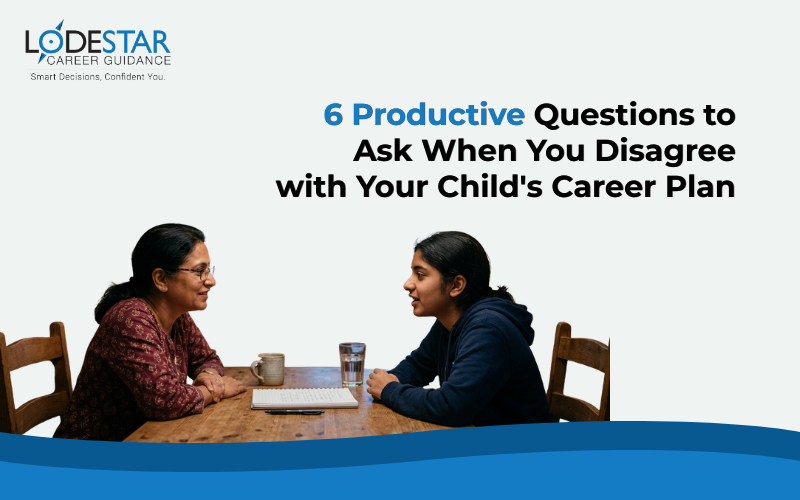
Every parent wants their child to succeed. But what happens when your child chooses a career path that leaves you feeling unsure, concerned, or completely unsettled? It might seem too risky, too unfamiliar, or simply not what you had imagined, and in that moment love can quickly turn into anxiety, and a calm chat can turn into an argument.
Here is the reassuring part: disagreement does not mean disconnection. With the right approach, even the most difficult career conversations can become moments of understanding and clarity. Often it is not about convincing your child, it is about asking the right questions. Here are six thoughtful, open-ended ones to try when your child’s choice does not match your expectations.
1. “Can You Walk Me Through What Made You Choose This Path?”
Opening this way shows you are not dismissing the choice or jumping to conclusions. It invites your child to explain their thinking rather than defend it, and a child who feels heard is far more likely to listen in return.
- It works far better than “why are you doing this?”, which can sound like an accusation.
- You may find they have researched more than you realised, or that they are leaning on assumptions, and either way you can guide them better.
2. “What Parts of This Career Excite You the Most?”
Your child might want to be a filmmaker, an entrepreneur, or a psychologist, but what actually draws them in? This question helps them get clear on their own motivation, and it tells you a lot about how grounded the choice really is.
- It reveals whether they are chasing a glamorous image or a genuine interest.
- It lets you support the excitement while gently flagging any blind spots.
3. “Have You Explored What a Day in This Profession Actually Looks Like?”
Many career ideas come from social media, films, or a friend’s opinion, but most professions look very different up close, with routines and challenges that rarely show up online. This question nudges your child past the surface.
- Suggest they speak to someone already in the field, or try an internship or job-shadowing.
- The aim is not to discourage them, but to help them see the full picture before committing.
4. “What Other Options Did You Consider, and Why This One?”
This shows how deeply your child has thought about their future, and whether they have compared more than one path. Children often default to a single idea simply because they do not know what else exists.
- If they have not explored alternatives, gently encourage a look at other career options.
- The goal is not to change their mind, but to help them decide with the full set of facts.
5. “What Skills Will You Need, and How Will You Build Them?”
This shifts the conversation from the idea of a career to the reality of building one. If your child wants to be a fashion designer, ask what they have actually done to explore it.
- Look for concrete steps, like workshops, learning relevant tools, or researching courses and entrance exams.
- It is not a test. If they have not started yet, they may either realise they are not ready, or feel motivated to begin.
6. “Would You Be Open to Exploring This With a Career Expert?”
This is often the most important question of all. If your child is open to it, career counselling becomes a neutral space where you both can ask questions and take a data-driven approach to the decision.
- It bridges the gap between a child who feels misunderstood and a parent who feels unheard.
- A trained counsellor brings facts, structure, and real-world insight, rather than opinion.
What These Questions Reveal
By asking rather than arguing, you are not challenging your child, you are inviting them to think more deeply. The answers often surprise parents, and they almost always make the next conversation easier. In the process, you may discover that:
- They have done more homework than you thought.
- They are passionate but need better guidance.
- They have chosen a path based on assumptions or myths.
- Or they are simply unsure and need your help sorting it out.
Disagreement Is Natural, and So Is Understanding
It is easy to fall into the trap of controlling a decision out of fear, but the best decisions happen when both child and parent feel heard. When your child’s plan does not match your expectations, start with curiosity rather than conflict. Listen first, question gently, and support their exploration.
You do not have to agree with everything to understand everything better, and that is what builds trust. Lodestar helps families navigate these conversations with scientific assessments and expert counselling. As India’s first scientific career guidance company, with more than 10 years of experience and over 60,000 students guided, of whom more than 90 percent rated the service highly, Lodestar reads your child’s Personality, Interest, and Aptitude, then turns it into a clear Plan A and Plan B through one-to-one sessions you attend together.
Ready to turn disagreement into discovery? Take the free quick test to see where your child’s strengths point, or book a Lodestar career guidance session to explore the right path together.
